
Introduction
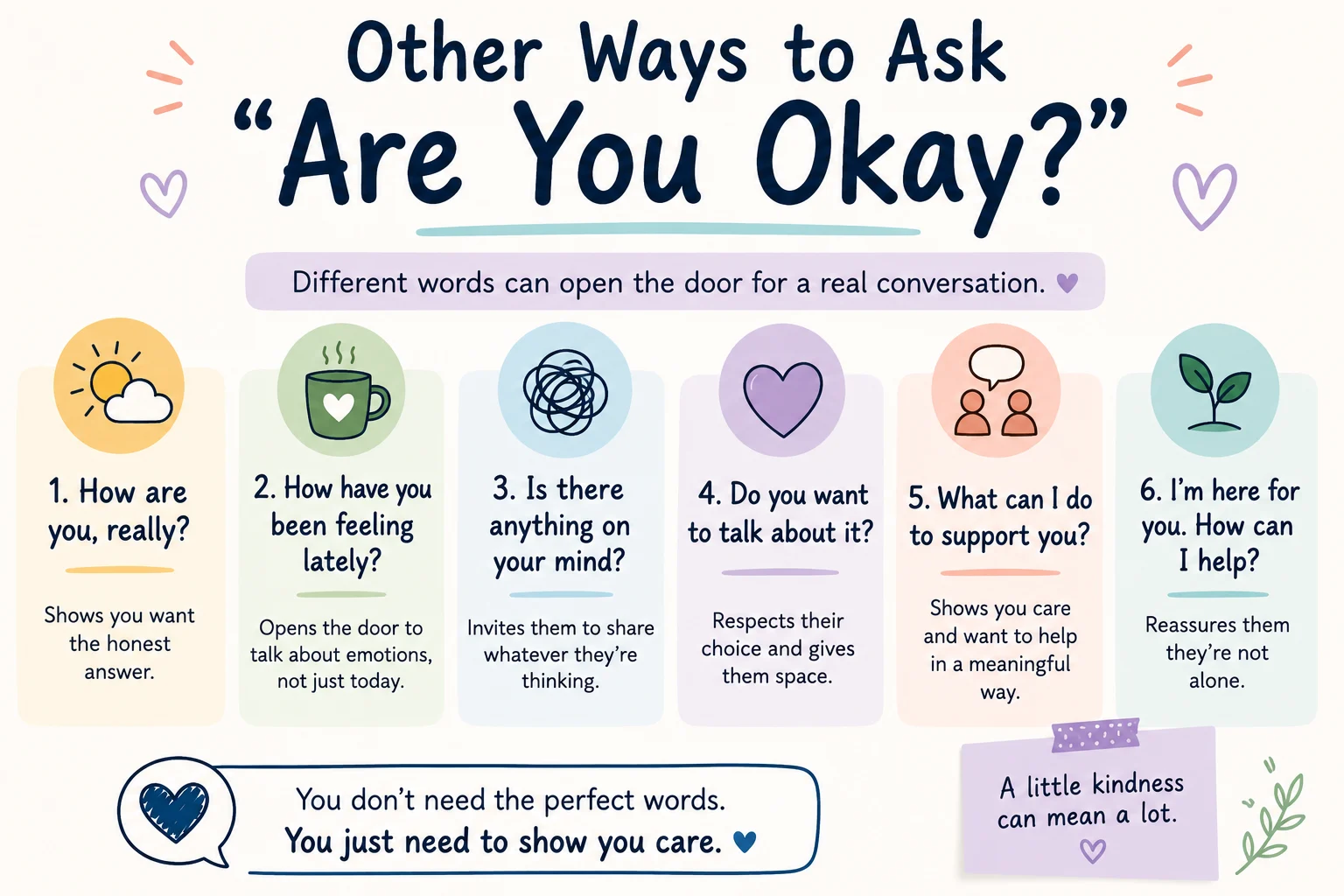
Other ways to ask are you okay can help you show genuine concern without making the conversation feel forced, awkward, or overly serious. While “Are you okay?” is simple and familiar, sometimes you need a softer, warmer, or more natural way to check on someone.
Maybe your friend has been unusually quiet. Perhaps your partner seems distracted. A coworker might look overwhelmed, or someone you care about may have gone unusually silent over text. In moments like these, the right words can create an opening for an honest conversation.
That is why knowing other ways to ask are you okay is useful in everyday communication. You can choose a phrase based on your relationship, the person’s mood, and the seriousness of the situation.
In this guide, you will find other ways to ask are you okay for texting, friendships, relationships, workplaces, serious situations, and casual conversations. You will also learn how to check on someone without putting pressure on them and what to say after they finally open up. For more insights, read here:- Other ways to say I need your help and Other ways to say looking forward to it.
Quick Summary: Other Ways to Ask Are You Okay
If you need a quick answer, these are some of the most natural other ways to ask are you okay:
- How are you doing?
- Everything alright?
- How are you holding up?
- How are you feeling?
- You doing okay?
- Is something on your mind?
- Is everything okay?
- Want to talk about it?
- How have you been lately?
- Is something bothering you?
- Do you need anything?
- How are things going?
- You seem a little quiet. Everything good?
- Is there anything I can do?
- How are you really doing?
The best option depends on the situation. A casual “You good?” may work perfectly with a close friend, while “How are you holding up?” may be more appropriate when someone is going through a difficult time.
Why Use Other Ways to Ask Are You Okay?
The words you use when checking on someone can influence how comfortable they feel responding. “Are you okay?” is perfectly acceptable, but it can sometimes sound automatic, especially if it is repeated.
Using other ways to ask are you okay lets you communicate your concern more naturally.
For example, “Everything alright?” sounds relaxed. “How are you holding up?” acknowledges that someone may be dealing with something difficult. “Is there anything I can do?” moves beyond asking about their feelings and offers practical support.
From a communication perspective, open-ended questions can encourage someone to share more than a simple yes-or-no answer.
10 alternatives
- How are you doing?
- How have you been feeling?
- Everything alright?
- How are things going?
- You doing okay?
- How are you holding up?
- Is everything okay?
- How’s everything with you?
- Is something on your mind?
- How have things been lately?
Real-life scenario: Your friend has been unusually quiet during lunch. Instead of asking repeatedly, “Are you okay?”, try “How have you been feeling lately?”
Other Ways to Ask Are You Okay Casually
Not every check-in needs to sound serious. When you are talking to a close friend, sibling, classmate, or someone you know well, casual wording can feel more authentic.
The trick is to match your language to the relationship.
10 casual alternatives
- You good?
- Everything cool?
- All good?
- How’s it going?
- You doing alright?
- How are things?
- Everything okay on your end?
- How’s your day going?
- What’s up with you?
- You seem quiet today—everything good?
These casual other ways to ask are you okay work especially well in everyday conversations.
Real-life scenario: Your friend suddenly stops joking in your group chat. A simple “You good? You seem quiet today” feels natural without making the situation unnecessarily dramatic.
Caring Other Ways to Ask Are You Okay
When someone matters to you, your question can communicate warmth and genuine concern.
Caring language is particularly useful when you suspect someone is struggling but do not want to force them to explain everything.
10 caring alternatives
- How are you really doing?
- How are you holding up?
- Is there anything you want to talk about?
- Is something bothering you?
- How are you feeling today?
- Is there anything I can do for you?
- Do you want some company?
- Is there anything on your mind?
- Would you like to talk about what happened?
- I just wanted to check in—how are you doing?
These other ways to ask are you okay show that you are interested in more than simply receiving a “yes” or “no.”
Real-life scenario: A close friend has had a difficult week. Saying “How are you really doing?” gives them permission to be honest.
Sweet Other Ways to Ask Are You Okay Over Text
Text messages can make short questions seem colder than intended because there is no facial expression or tone of voice.
Adding a little warmth can make your check-in feel more thoughtful.
10 text-friendly alternatives
- Hey, how are you doing?
- Just checking in—everything okay?
- How are you feeling?
- You seem a little quiet. Everything alright?
- How’s everything going?
- Is anything bothering you?
- Want to talk?
- How are things on your side?
- Just wanted to see how you’re doing.
- Need someone to talk to?
These other ways to ask are you okay are particularly useful when someone has been quiet over text.
Real-life scenario: Someone you care about has not been responding normally all day. Instead of sending several “Are you okay?” messages, try: “Hey, just checking in. How are you doing?”
Other Ways to Ask Are You Okay Without Sounding Awkward
Sometimes the question itself is not the problem. The timing and wording are.
If you suddenly ask someone, “Are you okay?” without context, they might wonder why you are concerned.
One solution is to mention something you noticed without assuming that something is wrong.
10 natural alternatives
- You seem a little quiet today. Everything okay?
- You seem distracted. Everything going alright?
- You’ve been a little distant lately. How are you doing?
- You don’t seem like yourself today. Want to talk?
- You look like you have a lot on your mind.
- Is something going on?
- How have things been lately?
- You seem stressed. Want to take a break?
- I noticed you’ve been quiet. How are you feeling?
- Is there something you want to get off your chest?
These other ways to ask are you okay sound more conversational because they explain why you are checking in.
Real-life scenario: A normally talkative coworker has become unusually quiet. “You seem a little distracted today. Everything going alright?” sounds observant without being intrusive.
Professional Other Ways to Ask Are You Okay?
Workplace communication requires a little more sensitivity. You want to show concern while respecting professional boundaries.
Rather than asking about someone’s private life, focus on their wellbeing or offer practical assistance.
10 professional alternatives
- Is everything alright?
- How are things going?
- Are you doing okay?
- Is there anything you need help with?
- How are you managing everything?
- Is everything going smoothly?
- Would you like a hand with anything?
- How are you holding up with the workload?
- Is there anything I can do to make things easier?
- I just wanted to check in. How are things going?
These other ways to ask are you okay can work well with colleagues, managers, clients, and teammates.
Real-life scenario: Your teammate looks overwhelmed before an important deadline. “Would you like a hand with anything?” may be more helpful than simply asking whether they are okay.
Gentle Other Ways to Ask Are You Okay When Someone Is Upset
When someone appears upset, your goal is to create an opening rather than force a conversation.
Gentle questions give the person control over how much they want to share.
10 gentle alternatives
- Is everything alright?
- Do you want to talk about it?
- How are you feeling?
- Is something bothering you?
- Would you like some company?
- Want to tell me what’s going on?
- Is there anything you need right now?
- Do you feel like talking?
- I’m here if you want to talk.
- Would it help to talk about what happened?
These other ways to ask are you okay are useful when you want to show support without demanding details.
Real-life scenario: Someone becomes emotional during a conversation. Instead of immediately asking for an explanation, try “Do you feel like talking?”
Flirty and Romantic Other Ways to Ask Are You Okay
When talking to a partner or romantic interest, you can make your question warmer while keeping the concern genuine.
If the situation is serious, avoid turning the moment into a joke. Affection should support the conversation, not distract from it.
10 romantic alternatives
- Hey, you okay?
- How’s my favorite person doing?
- Everything alright, you?
- How are you feeling, honestly?
- Something on your mind?
- Want to tell me what’s bothering you?
- Need a little extra attention today?
- How can I make your day better?
- Want me to stay with you for a while?
- What can I do to put a smile on your face?
These other ways to ask are you okay combine concern with affection.
Real-life scenario: Your partner has had a stressful day. “How can I make your day a little better?” shows that you want to support them rather than simply asking for an explanation.
Funny Other Ways to Ask Are You Okay?
Humor can make a check-in feel lighter when the situation is clearly not serious.
However, avoid joking when someone is genuinely distressed. The goal is to make the conversation easier, not dismiss their feelings.
10 funny alternatives
- You surviving over there?
- Everything still functioning?
- You good, or should I send snacks?
- Is your brain on vacation today?
- Need emergency coffee?
- You holding it together?
- Should I be concerned or bring pizza?
- Everything under control?
- Are we having a normal day or one of those days?
- Do you need backup?
These playful other ways to ask are you okay work best among people who already share a comfortable sense of humor.
Real-life scenario: Your friend is overwhelmed with homework but is clearly joking about it. “You surviving over there?” can show concern without making the moment too serious.
Other Ways to Ask Are You Okay Without Pressuring Someone
Checking on someone does not mean you are entitled to an explanation.
Sometimes people need time before they are ready to talk. Giving them that space can actually make them more comfortable opening up later.
10 pressure-free alternatives
- Want to talk about it?
- You don’t have to explain, but I’m here.
- Is there anything you need?
- Would you like some space?
- Do you feel like talking?
- I’m here whenever you’re ready.
- Want company or some alone time?
- Is there anything I can do?
- You can talk to me if you want.
- No pressure—I just wanted to check in.
These other ways to ask are you okay leave room for the person to choose how they respond.
Real-life scenario: Your friend says they are not ready to discuss a personal issue. A respectful response is, “No pressure. I’m here whenever you’re ready.”
Serious Other Ways to Ask Are You Okay?
When something significant has happened, a generic “Are you okay?” may not be enough.
In serious situations, direct but calm questions can help you understand what the person needs.
10 alternatives
- Are you safe right now?
- How are you coping with everything?
- What do you need right now?
- How are you holding up?
- Do you need someone with you?
- Is there anything I can do immediately?
- Would you like me to stay with you?
- Do you want help contacting someone?
- How are you feeling after everything that happened?
- What would make things a little easier right now?
These other ways to ask are you okay are more specific and useful when the circumstances are serious.
Real-life scenario: After a difficult event, asking “What do you need right now?” may be more helpful than asking the person to summarize their emotions.
Other Ways to Ask Are You Okay When Someone Says “I’m Fine”
“I’m fine” does not necessarily mean that everything is perfect. However, it is also important not to assume that someone is hiding something.
The best response is usually gentle rather than confrontational.
10 follow-up questions
- Are you sure?
- Do you really feel okay?
- You can tell me if something is wrong.
- Want to talk about it?
- Is there something you’re not saying?
- How are you feeling underneath all that?
- Do you need anything from me?
- I’m here if you want to talk.
- You seem like something is on your mind.
- Would you rather have some space?
These other ways to ask are you okay give the person another opportunity to open up without forcing them.
Real-life scenario: Someone says “I’m fine” but looks upset. Instead of saying, “No, you’re not,” try, “Okay. Just know I’m here if you want to talk.”
Personal Other Ways to Ask Are You Okay?
Personal conversations often become easier when you ask about the specific experience rather than using a broad question.
Instead of simply asking whether someone is okay, you can ask how they are coping, what has been difficult, or what support they need.
10 thoughtful alternatives
- How have you been coping lately?
- What’s been on your mind?
- How are you feeling about everything?
- Has anything been weighing on you?
- How have things been affecting you?
- What’s been the hardest part?
- Is there something you’ve been struggling with?
- How can I support you?
- What would help right now?
- What do you need from me?
These other ways to ask are you okay encourage deeper conversations when the relationship allows it.
Real-life scenario: A family member is dealing with a stressful change. “How have you been coping with everything?” invites them to explain their experience in their own words.
Best Other Ways to Ask Are You Okay by Situation
Choosing the right phrase becomes easier when you consider the context.
| Situation | Natural option |
|---|---|
| Close friend | “How are you really doing?” |
| Casual friend | “Everything alright?” |
| Partner | “How are you feeling, honestly?” |
| Coworker | “How are things going?” |
| Someone upset | “Do you want to talk?” |
| Someone stressed | “Is there anything I can help with?” |
| Someone distant | “You seem a little quiet. Everything okay?” |
| Text conversation | “Just checking in—how are you doing?” |
| Serious situation | “Are you safe right now?” |
| Someone who says “I’m fine” | “Okay. I’m here if you want to talk.” |
The simplest rule is to match the intensity of your question to the intensity of the situation.
Mistakes to Avoid When Asking If Someone Is Okay
Even genuine concern can accidentally sound judgmental or intrusive.
When using other ways to ask are you okay, remember that the person may not be ready to explain what is happening.
10 common mistakes
- Asking repeatedly after they already answered.
- Saying, “You’re obviously not okay.”
- Making their problem about yourself.
- Demanding an explanation.
- Using sarcasm during a serious moment.
- Interrupting their response.
- Giving unwanted advice immediately.
- Comparing their problem to yours.
- Saying, “Just get over it.”
- Assuming you know exactly how they feel.
Real-life scenario: If someone says they do not want to discuss something, respect that boundary. “That’s okay. I’m here when you’re ready” is often more supportive than pushing for answers.
What to Say After Someone Opens Up
Asking whether someone is okay is only the first step. How you respond after they answer can matter even more.
If someone shares something difficult, do not immediately try to solve everything. Sometimes people need advice, while other times they simply need someone to listen.
10 supportive responses
- That sounds really difficult.
- I’m glad you told me.
- That makes sense.
- I can understand why you feel that way.
- What can I do to help?
- You don’t have to handle it alone.
- Take your time.
- I’m listening.
- Would you like advice or just someone to listen?
- I’m here for you.
Real-life scenario: Your friend finally explains why they have been distant. Instead of immediately giving solutions, start with, “I’m glad you told me. I’m listening.”
Related Search Questions About Other Ways to Ask Are You Okay
People searching for other ways to ask are you okay may also be looking for answers to these related questions:
- What can I say instead of “Are you okay?”
- How do you ask someone if they are okay without sounding awkward?
- What is a caring way to ask if someone is okay?
- How do you check on someone over text?
- What are cute ways to ask if someone is okay?
- How do you ask a friend if something is wrong?
- What can I say when someone says “I’m fine”?
- How do you ask someone if they are struggling?
- What is a professional way to ask if someone is okay?
- How do you show concern without being intrusive?
These variations naturally expand the topic beyond one exact phrase and help cover different conversational search intents.
FAQ About Other Ways to Ask Are You Okay
1. What are the best other ways to ask are you okay?
Some of the best alternatives are “How are you doing?”, “Everything alright?”, “How are you holding up?”, “How are you feeling?”, and “Is something on your mind?”
2. How do I ask if someone is okay without making them uncomfortable?
Use a gentle, open-ended question without demanding an explanation. “I just wanted to check in. How are you doing?” is a natural option.
3. What is a sweet way to ask someone if they are okay?
Try “How are you really doing?” or “What can I do to make things a little easier?” Both communicate genuine concern.
4. How do you ask a friend if they are okay?
With a friend, you can use casual language such as “You seem a little quiet today. Everything good?” or “Want to talk about anything?”
5. How do you ask a coworker if they are okay?
Keep the question professional and respectful. “How are things going?” or “Is there anything you need help with?” works well.
6. What should I text someone who seems upset?
Try “Hey, just checking in. How are you feeling?” It creates an opening without pressuring the person to explain everything.
7. Is “Are you okay?” a good question?
Yes. It is direct, familiar, and appropriate in many situations. However, another phrase may sound more natural depending on the relationship and circumstances.
8. What should I say when someone says “I’m fine”?
You can say, “Okay. I’m here if you need anything.” This communicates support while respecting their choice.
Conclusion
Knowing other ways to ask are you okay gives you more flexibility when showing concern. You do not always need a complicated phrase. Sometimes “Everything alright?” is enough. In other situations, “How are you holding up?” or “What do you need right now?” may be more appropriate.
The best approach depends on the person, your relationship, and the circumstances. A friend may appreciate a casual “You good?” while a coworker may respond better to “How are things going?” Someone going through a difficult moment may need a more direct question about what support they need.
Ultimately, good communication is not just about choosing the right words. It is about communication, genuine concern, patience, and listening.
So, the next time someone seems different, do not overthink it. Notice what is happening, choose one of these other ways to ask are you okay, and give them room to answer honestly.